Search
Information Technology and Software
Additive Manufacturing Model-based Process Metrics (AM-PM)
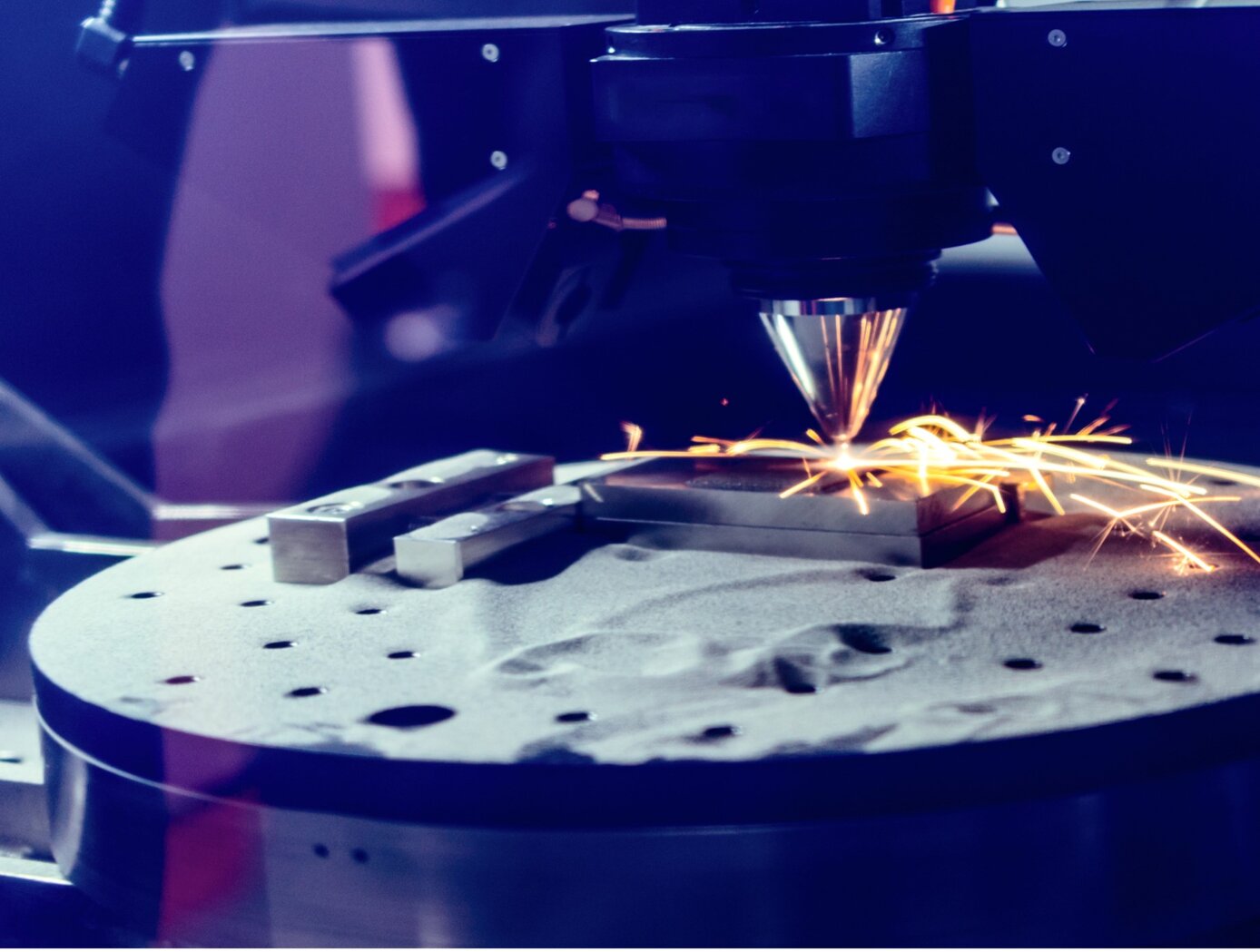
Modeling additive manufacturing processes can be difficult due to the scale difference between the active processing point (e.g., a sub-millimeter melt pool) and the part itself. Typically, the tools used to model these processes are either too computationally intensive (due to high physical fidelity or inefficient computations) or are focused solely on either the microscale (e.g., microstructure) or macroscale (e.g., cracks). These pitfalls make the tools unsuitable for fast and efficient evaluations of additive manufacturing build files and parts.
Failures in parts made by laser powder bed fusion (L-PBF) often come when there is a lack of fusion or overheating of the metal powder that causes areas of high porosity. AM-PM uses a point field-based method to model L-PBF process conditions from either the build instructions (pre-build) or in situ measurements (during the build). The AM-PM modeling technique has been tested in several builds including a Ti-6Al-4V test article that was divided into 16 parts, each with different build conditions. With AM-PM, calculations are performed faster than similar methods and the technique can be generalized to other additive manufacturing processes.
The AM-PM method is at technology readiness level (TRL) 6 (system/subsystem model or prototype demonstration in a relevant environment) and is available for patent licensing.
Information Technology and Software

Predicting Defects in Additive Manufacturing
This method leverages advanced computational modeling to evaluate localized heating conditions and fusion metrics and quantify defect risks dynamically, allowing for optimized build files and process adjustments that drastically improve the final component. The model can be trained using PPF and print samples from an AM machine's prior builds to learn correlations between the machine's instructions, behavior during build, and final product quality. By integrating machine feedback metrics, model-based thermal and fusion metrics, and in-situ sensor metrics, the model learns predictive signatures that allow it to quantify localized defect probability in PBF laser beam metals. Manufacturers can employ this method to understand the reproducibility of their prints and perform defect compensation before parts are fully deployed, improving quality, reliability, and success.
Particularly useful to industries that require stringent certification of safety-critical components, such as the aerospace, space, medical, and automotive sectors, this method can be flexibly deployed globally or adapted to specific AM machines. By predicting the probability of defects before and during production, 3D printing service providers and AM equipment manufacturers can save significant amounts of time and money while drastically reducing part variability. This predictive capability also allows organizations to certify parts faster and ensure consistent material properties, which is essential for meeting rigorous performance and safety standards. This is method is currently available for patent licensing (no software included).
Manufacturing

Advanced Thermal Management for ISRU (In-Situ Resource Utilization) Additive Manufacturing
Lunar regolith presents unique challenges for laser-based additive manufacturing. Unlike conventional metal or ceramic powders, regolith is a heterogeneous mixture of ceramics, metals, metal oxides, and minerals. During laser processing, each constituent undergoes independent phase transitions, creating material behavior variations between layers. Excessive heat causes dissociation and gas bubble formation, while rapid cooling traps porosity. The glassy components are particularly sensitive; once melted, they cannot return to their original state, and improper thermal management during re-melting causes crystalline structure failures and anisotropy throughout parts.
This methodology addresses these challenges through coordinated thermal control across the build. Custom scan patterns and beam-shaping optics maintain target temperature ranges across the processing area while controlling heating and cooling rates. Layer height, hatch spacing, scan pattern, re-heating intervals, laser power, and inter-layer dwell times are precisely coordinated to manage the sequential phases of melting, nucleation, grain growth, and annealing. Previous layers of unsintered regolith act as insulation and as a controlled quench medium, maintaining temperature and preheating subsequent layers.
A dedicated build plate is not required; a firebrick build plate has been used to support rapid, quick-turn parameter development in a laboratory setting. Real-time thermal imaging monitors the process. The methodology has been demonstrated in sustained operation within a thermal vacuum chamber at 10e-6 Torr, replicating the operational environments for lunar and Martian surface manufacturing. The amorphous vitrified glass process is at TRL 5; glass-ceramic components are currently undergoing validation for final strength claims. This advanced thermal management process is available for patent licensing.
Materials and Coatings

GRC103y: Nano-Yttria Strengthened C103 for Additive Manufacturing
The manufacturing process, building on techniques showcased in LEW-TOPS-151, employs a novel acoustic mixing technique to coat spherical C103 powder particles with a uniform distribution of sub-200 nanometer yttria particles. During laser powder bed fusion additive manufacturing, layer-by-layer remelting disperses these yttria particles uniformly throughout the component microstructure. This eliminates the expensive, time-consuming mechanical alloying steps traditionally required for ODS alloys while enabling near-net-shape fabrication of complex geometries.
Performance testing demonstrates substantial improvements: GRC103y exhibits double the yield strength at 800°C and 1.5x the yield strength at 1,400°C compared to baseline C103. The alloy also shows superior thermal stability: after one hour at 1,500°C, GRC103y retains 90% of its room temperature strength compared to only 67% for C103. Preliminary creep testing at 1,300°C and a stress of 50 MPa indicates significant improvements in creep resistance by 2539 times over baseline C103. Furthermore, GRC103y maintains excellent formability, allowing manufacturers to use traditional fabrication methods when desired.
While NASA originally developed GRC103y for rocket propulsion and hypersonic vehicle applications, the alloy offers value across multiple industries. Aerospace companies can achieve weight savings or push systems to higher temperatures, while the alloy's compatibility with commercial oxidation coatings makes it suitable for environments requiring oxidation protection. GRC103y is currently available for patent licensing.
Materials and Coatings

Additively Manufactured Oxide Dispersion Strengthened Steel for Nuclear and High-Temperature Applications
Building on the dispersion and acoustic mixing methods developed during the creation of NASA's Glenn Research Center GRX-810 technology, this Additively Manufactured ODS Steel uses an innovative coating process to overcome the limitations of traditional ODS steel manufacturing. The technology deposits yttrium oxide nanoparticles onto spherical iron-chromium steel powder particles. During the additive manufacturing process, the coated powder particles are melted and consolidated layer by layer using laser powder bed fusion. As the material solidifies, the oxide nanoparticles distribute uniformly throughout the microstructure, creating a dispersion-strengthened material. The dispersed yttria nanoparticles pin grain boundaries and dislocations, significantly improving creep resistance and mechanical strength at elevated temperatures. Preliminary testing has demonstrated a 10-fold improvement in creep properties compared to non-ODS baseline steels.
The technology demonstrates compatibility with industrial-scale laser powder bed fusion systems and can be adapted to incorporate alternative ceramic nanoparticles beyond yttria. Applications span the nuclear energy sector, including commercial fission reactor components, fusion reactor first-wall and blanket structures, nuclear thermal propulsion systems for space exploration, and in-space nuclear power systems where extreme temperature performance and radiation resistance are essential. This strengthened steel is available for patent licensing.